Review: “The Name of the Wind” by Patrick Rothfuss

The Name of the Wind

By Patrick Rothfuss

5-stars

name of the wind

I have found my new fantasy series. “The Name of the Wind” is the first in “The Kingkiller Chronicle” series by Patrick Rothfuss.

“I have stolen princesses back from sleeping barrow kings. I burned down the town of Trebon. I have spent the night with Felurian and left with both my sanity and my life. I was expelled from the University at a younger age than most people are allowed in. I tread paths by moonlight that others fear to speak of during the day. I have talked to Gods, loved women, and written songs that make minstrels weep.

My name is Kvothe. You may have heard of me.”

I haven’t had a good fantasy series to get addicted to since I was reading Anthony Horowitz as a teenager. “The Name of the Wind” by Patrick Rothfuss is surely a fantasy for adults. The most sophisticated of its kind I have come across. The language is rich and beautiful and the world Patrick Rothfuss has lent himself to flourishes under his care.

Any book preceded by a fictional map already has my attention. Why? Because it is an indicator of how rich this fictional world is; of how much thought has gone into its construction.  There is a sense of careful management that dictates the movement of the narrative as well as the development of characters.

At 662 pages, it isn’t a paperback that you can snugly fit into your handbag. The creased spine and dog-eared corners of my copy – an upsetting thing for any booklover – is proof of my need to make it fit into my handbag and carry it everywhere until I had finished. Its length might sound intimidating, but the lyricism and storytelling carried me through hundreds of pages without even noticing.

If I were to criticise this book, it would be to say that occasionally the language is so rich with imagery that it is slightly treacly. My other minor criticism is that the majority of the book consists of our protagonist, Kvothe, telling his past life story, neglecting the present of the story. And when I passed the 600th page, I realised that the story had barely progressed at all.

BUT, having said all this, I do not care. My criticisms fade into insignificance. I hope “The Name of the Wind” will be the extended preface to a long series of novels that will continue to capture my imagination for years to come.

Review: “The Reader on the 6.27” by Jean-Paul Didierlaurent

The Reader on the 6.27

Jean-Paul Didierlaurent

9781447276494The Reader on the 6-27

This book is the antidote. To cynicism, to the everyday drudgery of existence. I cannot recommend this book enough to you, my reader.

“The Reader on the 6.27” will reignite your hope and redeem every bad book, every disappointing ending; every over-pretentious pit-stain of a novel you have ever had the misfortune to encounter. This book will remind you of your faith in literature.

Guylain Vignolles hates his job; Guylain works in a book-pulping factory. His only joy is his morning ritual, where he boards the 6.27 train and reads from the fragments of books he has saved from the teeth of the monster. He reads aloud to his fellow passengers, who “show him the indulgent respect reserved for harmless nutters”. Nevertheless, he is the ray of sunshine that briefly illuminates the dullness of their 9-to-5’s.

“He was the reader, the bearer of the good word.”

Guylain appears to be suffering from the Nausea, as Sartre would define it: that indefinable feeling deep in your gut that life is pointless. Then one day, he happens upon a USB memory stick that changes his life forever. What is on the USB? The diary entries of a 28-year-old toilet attendant, named Julie.

How, you might ask, can this bored young woman, who sits outside toilet cubicles all day, help Guylain? How can accounts of what other humans are literally experiencing in their guts save him? Isn’t she just another sufferer of everyday drudgery, like him? Well, Julie is no ordinary toilet attendant.

Humanity abounds – glorious, at times stupid and disgusting, but glorious humanity. There is nothing high-flown about this honest, forthright account of how words can, sometimes, save people. Of how people can save each other.

This book is the antidote to modern life. Continue reading

Book Review: “The Buried Giant” by Kazuo Ishiguro

The Buried Giant

by Kazuo Ishiguro

buried giant 2.jpg

My first reading of an Ishiguro novel has shown me how his masterful storytelling has succeeded in capturing readers around the world.

A mysterious mist covers the land of medieval Britain and robs the inhabitants of their memories. Borrowing from Arthurian legend, Ishiguro takes us on a journey of discovery that meets with adventure and the heart-breaking account of what it means to love and to remember.

By elegantly weaving memories with present action, the passing of time becomes an impeccable example of writing style working in step with the narrative themes. In the quest to find the source of the mist, the memories of our characters come and go and we, as readers, glide imperceptibly between past and present. Quiet revelations permeate the story as they remember things forgotten, and uncover the truth of their present. These revelations are precious moments of truth and clarity spared of ostentation or announcement. You could almost miss them if it weren’t for the rapt attention that Ishiguro conjures with his gently powerful style.

There is not a single moment in this novel that doesn’t feel considered and concise. Every line, every sentence, every moment is integral. All the components are perfectly in tune with one another, like the internal workings of a clock. Busily, steadily, the cogs wind onward and we are comforted by the sense of considered purpose that sustains the entire novel.

As I neared the end, I felt a genuine desire for a quick resolution, a knot somewhere in my chest as I hastened to toward the last page. But, as throughout the rest of the novel, Ishiguro neither slows cruelly – as some authors do, stretching out our anxiety – nor hastily rushes his conclusion. He simply continues, steadily, unswervingly, with the measured pace of a practised storyteller. He trusts in the story to make its own impact and not once does he employ any cheap keep-away tactics.

“The Buried Giant” is a story that stays with you. Moving and gripping, but never pushing, pulling or grabbing, it is a style that invites you in but knows precisely when to let you go. Even when you implore him to continue.

“He felt as one standing in a boat on a wintry river, looking out into dense fog, knowing it would at any moment part to reveal vivid glimpses of the land ahead. And he had been caught in a kind of terror, yet at the same time had felt a curiosity – or something stronger and darker – and he told himself firmly, ‘Whatever it may be, let me see it, let me see it.’”


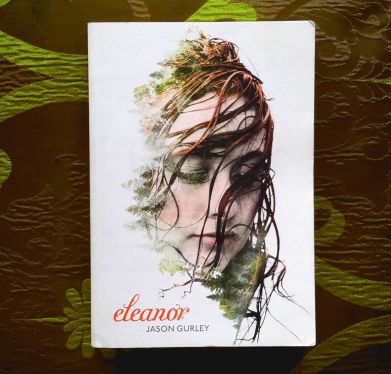
Book Review: “Eleanor” by Jason Gurley

Eleanor

By Jason Gurley

eleanor 2

When tragedy befalls the Witt family, young Eleanor is left to pick up the pieces of her grief-stricken parents. And just when it couldn’t seem to get any worse, Eleanor is pulled out of her world and thrown, bewildered, into a netherworld, before being flung back again with terrible consequences. Like Alice falling through the rabbit-hole, Eleanor dangerously traverses the line between the real and the other.

“Eleanor” by Jason Gurley is classified as sci-fi/fantasy. It would be better to describe it as a realistic drama set against a surrealist dreamscape. Sci-fi and fantasy novels can reflect reality as much as a naturalistic novel, but fantasy looks at the world through a prism that promotes an alternative focus. Like walking through a corridor of distorted mirrors at a fairground, Gurley chooses to inflate or relocate aspects of known reality, forcing specific themes and ideas to come into sharper relief. In the case of “Eleanor”, it is the deeply complex experience of grief that thrives in the freedom of a sci-fi. Continue reading

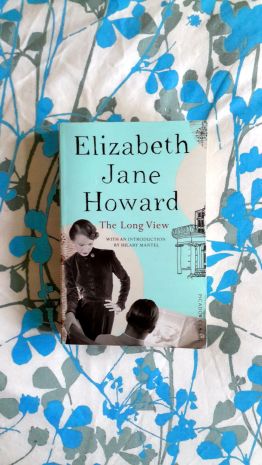
Book Review: “The Long View” by Elizabeth Jane Howard

The Long View

By Elizabeth Jane Howard

the long view1

Mrs Fleming has no first name for the first half of the book and the second half of her life. Defined by her wifely title, she struggles to maintain a sense of self – a struggle no doubt undergone by hundreds of women in this era.

This beautifully told narrative is in reverse: starting in 1950 and ending in 1927. By reversing the chronology, Antonia Fleming’s moment of revelation at age nineteen, becomes the conclusion of the book. This rearrangement creates a feel similar to that of a mystery novel: we know what has happened already, but we don’t know how or why. We begin with an intelligent and sophisticated middle-aged woman, living in London, trapped in an unhappy marriage, hosting dinner parties she doesn’t want with guests she doesn’t like. As the decades retreat, the veils are drawn back, we eventually approach her vulnerable 19-year-old self – a girl so capable of love and intelligent thought but drawn towards an unhappy future, almost inevitably.

It is for this reason that Antonia’s revelation makes both a satisfying and bittersweet end to the novel. I feel the urge to re-read the book immediately, but this time starting at the end, so that I can spot the clues and connections that bring the narrative together. The book is intelligently crafted, and such an endeavour would indeed prove fruitful.

It is beautifully written, although occasionally abstruse. The narrative voice is excellently used to create different characters within the text rather than constantly breaking the flow with dialogue. Howard’s ability to create their different voices is a treat. There is also a nod to formalism in its method of description, keeping the imagery far and away from clichéd or boring observation.

The book’s best feature is the way in which Mrs Fleming’s intimate thoughts are communicated fluidly and with such a degree of empathy that they cease to be fictional. Howard’s strength is finding the words and the cadence with which to communicate untold and often unspeakable feminine sensations.There is an innate femininity to many of the feelings and situations addressed by Mrs Fleming’s story. Told with respect and sensitivity, she reveals the humanity¸ not just the femininity, in the process, because they are made to be understood.Rather than diminishing or reducing female emotion to hysteria or irrationality, as is often the case in literature and life, we are given entry into the innermost workings of a feminine mind. Complex, certainly, but ultimately honest.

“She had forgotten these minute inversions of feeling, that with certain kinds of experience shift all the contours of any settled view.”


Book Review: “Good Omens” by Terry Pratchett & Neil Gaiman

Good Omens

By Terry Pratchett & Neil Gaiman

good omens 1

The world is coming to an end. The armies of Heaven and Hell are assembling. The Four Horsemen are gathering. And the Antichrist is playing make-believe with his friends and his hell-hound, Dog. An unlikely group of heroes converge on Lower Tadfield, Oxfordshire. Agnes Nutter’s prochecies are finally coming true, but this “ineffable Plan” business isn’t quite what everyone expects…

Have you ever been enjoying a book so much that you couldn’t put it down, but then found yourself reaching the end too soon and had to slow down so the adventure could continue for just a bit longer? “Good Omens” is the first book that has ever made me do this. Rushing towards its conclusion too quickly, I wanted to stay on the journey. I didn’t want it to end.

The characters, the language, the narrative – flippant and somehow bluntly logical in the face of utter nonsense. It is vivid, colourful and hilarious.

It’s a style I’ve grown to love from reading Pratchett’s Discworld series, but it is my first reading of a Gaiman  story. I couldn’t tell you when it was one or the other that had the reins from chapter to chapter. The narrative voice was consistent throughout and I honestly felt like I was reading a Pratchett. But I will definitely be getting stuck into some Gaiman very soon as a result of reading this book.

This is one of those books you could keep going back to and reading over and over again and finding more and more hidden gems that will keep surprising you for years to come. The imaginative powers of these two brilliant authors are seemingly endless. Endless and bottomless. Keep plumbing the depths of this book and the world they create will only get bigger and brighter. Whether you decide to focus on the story, the clever use of language and syntax or the ideas that bounce around like a rubber ball inside a perpetual motion machine, the delights do not stop coming.

As far as I’m concerned, this is the essence of what fiction should be. A world of play and an open invitation.

In this present moment, I wish I weren’t writing this blog; I wish I were reading “Good Omens” by Terry Pratchett & Neil Gaiman. A book that proves these two men deserve the title of Legend. Modern philosophers and linguistic philanthropists, this book is a gift for me and you and generations to come.


P.s. I finished reading my copy two days ago. I gave that same copy to a friend yesterday. Pass on the joy!

Book Review: “The Book Thief” by Markus Zusak

The Book Thief

By Markus Zusak

the book thief

This is a beautiful book. Exquisitely heart-breaking.

Germany is in the hands of the Führer, and Liesel Meminger is a book thief. Both Hitler and Liesel know that words have power. Words can save a person’s soul or inspire people to do unspeakable things.

In this novel, Markus Zusak is our omnipotent and benevolent wielder of words. His ability to capture the imagination is powerful and gentle. Master of the concise metaphor. I was drawn into the Book Thief’s world within the opening paragraphs and could not put it down. It begins simply and proceeds in uncomplicated terms. Its gentle twists and turns develop into a fully formed and complex story without you even realising. But I will not allow myself to over-analyse; I wish to leave this story unbroken.

Liesel stole books. And Death was her friend. Discover the rest for yourself.

Book Review: “The Noise of Time” by Julian Barnes


The Noise of Time

By Julian Barnes

noise of time book

5-stars

I was already a fan of Julian Barnes before I read this book. But I was familiar with his more overtly humourous titles – “Flaubert’s Parrot” and “A History of the World in 10 1/2 Chapters”. While this new novel is still unmistakably stamped with Barnes’ wry style, it is of a blacker kind than I had previously encountered.

“The Noise of Time” tells the story of real life Russian composer Dmitri Shostakovich, during the twists and turns of the Russian Revolution. It is a tale of one man’s struggle, and the problem of artistic freedom versus artistic integrity. You might think – or hope – that the first will bring about the second. If the artist is free to create as he wishes, then surely what he produces will, if he possibly can, be naturally something with integrity. Not so, when the grip of Communism has so thoroughly distorted the nature of what it means to be free.

“Let Power have the words, because words cannot sustain music. Music escapes from words: that is its purpose, and its majesty.”

The distortion of language, of terms like freedom and truth, make the role of musician in our historical protagonist an interesting lens through which to view Russia at that time. Even if words have been betrayed, perhaps there is still hope for music. Perhaps music can be heard above the din of propoganda, and deliver secret messages to those willing to hear. But if Shostakovich’s music could reach worthy ears, would political “truths” and the ghastly practise of Revisionism so dismantle the Russian landscape and its people, that both the man and his music would be drowned out by the noise of time?

And in amongst the big political and cultural questions Continue reading

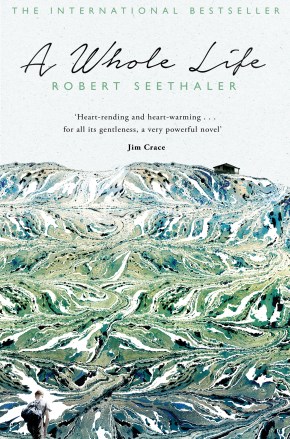
Book Review: “A Whole Life” by Robert Seethaler

The first book recommended to me by the staff at Waterstones:

a-whole-life

A Whole Life

by Robert Seethaler

5-stars

Neither the economy of language nor the physical coldness of the landscape do anything to dampen the warmth of feeling woven throughout this short novel – both bitter and sweet.

There is a frankness and plainness to the words that creates a world without over-filling it. You feel that every word is necessary. It is ungarnished. The infrequent dialogue is made the more potent by its scarcity and blunt truthfulness. You feel as if these are memories hewn by time to their most composite form; memories whose accuracy encompasses all that is needed, all that is most affective. Our guide, Egger, is a man of fortitude and quiet strength. His many trials, though tragic, are without the solipsism of tragedy.

“But each time the rumbling died away and the clear cries of the jackdaws could be heard again.”

He limps through life as best he can, and his quiet, persistent trudging is honourable and life-affirming. An unstudied lesson in philosophy; gently shown, not taught. We are blown through his snowy valley as quiet observers. In Egger’s solitude, we are not made to feel like intruders, but rather to join with the quiet breath of the mountains that are his constant companions. And for our silent companionship, his unimposing wisdom is our gift.

“A Whole Life,” in less than 150 pages. As you read, the sense of empathy settles quietly within, without your noticing and Egger, though often a stranger within his own story, is not a stranger to you for long.


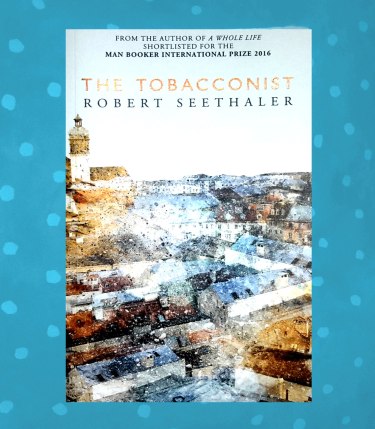
Alphabetty Spaghetty Review of The Tobacconist by Robert Seethaler

tobacconist-3

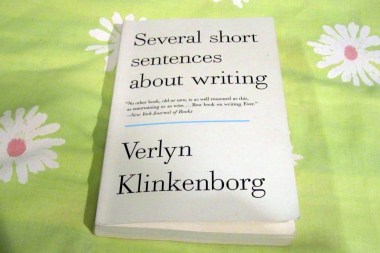
Book Review: “Several short sentences about writing” by Verlyn Klinkenborg

Several Short Sentences About Writing

by Verlyn Klinkenborg

book 1

“The question isn’t, can the reader follow you?
That’s a matter of grammar and syntax.
The question is, will the reader follow you?” (128)

I’ve never written a book review, but I think it goes something like this: a brief description of subject, author and intended audience; list good and bad points; and a couple of pithy quotes.  I shall largely adhere to this format.  Though do forgive me if I find the implied rules of this genre too confining for my wild artistic tendencies.

So, to begin: a brief description of subject, author and intended audience

This is a book written for writers by a writer about writing.

Too brief, perhaps.

While this text is applicable to writers of any experience or style, I think it is particularly useful for those at a turning point in their career as a writer – professional or otherwise.  You might be taking on a new genre, or adapting to an alternative medium – you wouldn’t write an internet blog like you would a private diary entry, for example. Or you might be moving from school to university, or university to the working world, and experiencing the imperative to evolve as a writer as well as a person. It is this last writer to whom I particularly recommend this book.

I have personally struggled with the step up from school to university writing. It is a transition that leads to anxiety. Be more mature, be more sophisticated. Be “better”. While university is the place to improve and mature, a better writer grows, not by anxiously reaching, but by exploring and experimenting. Don’t be bogged down by the “rules” of writing as they were dogmatically put to you in the early years of education. Respect the rules, of course, but don’t be afraid to challenge them. Verlyn Klinkenborg is emphatic on this point. “And yes, you may begin a sentence with ‘but.’” (119)

(From here-on, I shall refer to the author as VK. Younger readers: feel free to insert drinking puns.)

A revised brief description: this book is for the reader who is struggling to find her voice.

good and bad points

I am loath to tritely fulfil this requirement.  I shall rather offer a few points of interest:

On VK’s style: he really does practise what he preaches. Expect many short sentences about writing.

Don’t be precious about clichéd notions of “what it is to be a writer”. In fact, don’t be precious about clichés, full stop.

“A cliché is dead matter.
It causes gangrene in the prose around it, and sooner or later it eats your brain.” (45)

He isn’t a romantic. There will be no coddling.

VK follows the recent trend of using “her” as the generic pronoun in his text. I’m trying it out. I still find it odd on the ear, but then perhaps I’m antifeminist.

His style isn’t for everyone. He makes no exceptions and allows no excuses.  But he does not patronise you.  His is a clear, forthright voice.  He does not seek to trick or beguile, and though witty at times, his humour is curt at best. Some may find him abrasive, others, refreshing.

At times you will feel like you are back at school. But, as I have already discussed, re-examining the confining and sometimes misleading rules of English school teaching is crucial. This is how you extinguish anxiety and allow your own voice to emerge confidently.

and a couple of pithy quotes.

How about just one:

“You’re holding an audition.
Many sentences will try out.
One gets the part.
You’ll recognize it less from the character of the sentence itself
than from the promise it contains – promise for the sentences to come.” (101)


Reference:

Klinkenborg, V. Several short sentences about writing (New York: Vintage Books, 2013)

Further Reading:

“Several Short Sentences About Writing” Reviewed by Vinton Rafe McCabe (New York Journal of Books, 2012)