Review: “The Sunlight Pilgrims” by Jenni Fagan

The Sunlight Pilgrims

by Jenni Fagan
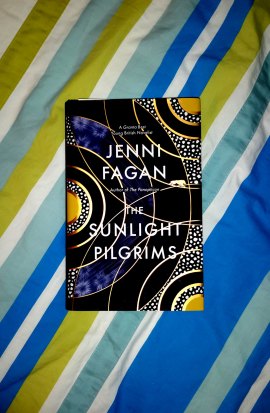
sunlight pilgrimsA wonderful story of humanity at its most pragmatic and enigmatic.

Set in 2020, Earth is about to have the worst winter since records began and they fear a new ice age is on the way. After the death of his mother and grandmother, Dylan moves to the foot of the Scottish Highlands, into the caravan that is his only inheritance. In the caravan park, Dylan meets Constance and her teenage daughter, Stella, who was her teenage son less than a year ago.

As the snow gets heavier and the temperature drops, the world is a whole new place – both beautiful and dangerous. In spite of the icy backdrop, an unlikely family unit is created, and their struggle to ward off the cold imparts the story with warmth of another kind.

“To lie like this. Let the snow fall out there. There is an ordinariness to their strange.”

The writing style took me a couple of chapters to get used to, but once I did, I found it to be very effective. The balance of pragmatic and enigmatic was like a kite flying up high but still pinned safely to the ground. The brilliant mix of raw, ethereal imagery and curt, dead-pan humour is simply brilliant. This tantalising combination is embodied in the teenage Stella.

“Our cells crave light because that is what we started as, it’s what we are. All humans are sunlight pilgrims. Except me. Cos I’m a goth. I could totally live without light.”

Stella’s character is sensitively drawn, particularly with reference to her alternative gender identity. It is important to recognise that she does not struggle with her identity, but rather laments that everyone else does, including her father and the boy next door.

“Outside there is a blue, blue sky and frost has dusted the Clachan Fells mountains silver. Stella Fairbairn feels like she is going to cry, and nobody is even up yet. She is a swan wrapped in cellophane and everyone can see through her skin. Lewis will never kiss her again. She might as well forget it. She isn’t pretty, and she’s angular, and she has a penis.”

And then there is Dylan, a man who loves a woman and her child. But struggles with a secret he doesn’t know how to share.

These “normal” concerns, by comparison with the apocalyptic approach of a modern ice age, are what fill the narrative with a palpable sense of humanity. Rather than focusing on the potential drama and jeopardy of the oncoming storm that would turn it into an action film, Fagan uses it as a way to bring out the beauty and fragility of the human experience. The quiet yearnings for a normal life far outshine all other fears. And this is a heartening, noble message. Ultimately, when we are faced with potentially insurmountable odds, all we can do is carry on living. Fall in love, fancy the boy next door, have a gin and grieve our mothers.

“The urge in him to lie with her in the dark and hold her. To drink wine and read books and ignore each other, but her foot just by his, her legs, her mouth.”
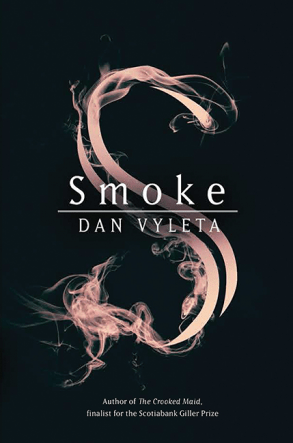

“Smoke” by Dan Vyleta – Book Review

Smoke

Dan Vyleta

smoke dan vyleta5-stars


For the fourth time this year, I have found my new favourite book.

A gripping story, complex characters and a world rich with ideas.

What would a world be like where all your sins are laid bare and you are judged by the smoking gun you carry within you everywhere? Judged for sins you have not committed, for desires you never act on. A world in which even an impure thought is betrayed by your own body, seeping from your pores, staining your clothes with Soot and infecting those around you in a Smoke of your own making. A world where teenage boys fear retribution if their sheets are stained with Soot in the morning because of what they dreamt the night before? In “Smoke”, this is the reality for Dan Vyleta’s characters. Like our sweat glands responding to fear, anger or excitement, so do his characters produce Smoke.

His world is wreathed in the so-called Smoke: the physical manifestation of sin. But if one Smokes when one feels love, lust, pain, is it really as simple as that?

Vyleta’s is a world that could have been. He takes Victorian London, bathed in a different kind of smoke than existed in the Industrial Revolution of our familiar history. A symptom of change and development is transformed into a cause of social and political stagnation in the novel. Everyone believes that Smoke is caused by sin, and that belief breeds fear and separation. The elites of society are the clean ones; taught control from a young age, they appear smokeless. The city of London, on the other hand, filled with common people and common dirty desires, is a well of sin, of Smoke. The gentry therefore appear pure and reasonable, while the commoners are dirty and sinful. But underground, in the mines and the sewers, there are those who speak of revolution.

It is a simple and elegant metaphor which Vyleta extends into a complete landscape, so familiar and yet so altered by this one change. Moral systems warped but still recognisable as our own; a fantasy that rings with truth and is therefore all the more unsettling.

“Power … is underwritten by morality. Those who rule, rule because they are better people than their subjects. It’s written on our linen. It cannot be denied.”

The novel is written in the present tense which I really enjoyed, bringing urgency and reality to the narrative. Vyleta also uses an ensemble style of narration, periodically inhabiting different characters. It’s a great way of not only building tension and helping to the move the story from a variety of different directions, but also ensures the reader gets a full understanding of the world Vyleta has created. He covers all the social strata, reinforcing the significance of the moral function of Smoke as it transfers to the social and political landscape. A miner’s wife, a headmaster, a noblewoman, a drunk priest, a righteous revolutionary, a butler, a teenage girl, a murderous schoolboy.

Dan Vyleta must be a man with an amazing ability to empathise with all kinds of people. He completely embraces the complexity of his characters with an honesty that is acutely felt, existing as they do in a world of moral confusion. What is most striking is the ease with which Vyleta slips into each body. At times, he conveys concise and acute spasms of emotion that sound with absolute clarity. Emotions that are meaty and guttural, but also tender, embarrassing and secret. He embraces the humanity of emotions we are ourselves ashamed of and removes that shame by putting them into simple, unapologetic terms. And that is perhaps the blessing that follows the curse of Smoke. It confronts us with our own intentions and asks us to reckon them, but also to share them and find solace in each other.

“Smoke”, besides being a wonderful read, is a book that raises questions. It highlights truths about the society we live in today and about the social landscape we have fashioned from the roots of our moral beliefs. It also highlights the fragility of those beliefs, warning against damaging absolutism; looking for the greys, not just black and white.

One of my favourite things about the book is the fact that it leaves the reader with a lot of questions unanswered. I like this aspect because it stays true to the book’s themes:  questions of morality have no easy answers. This novel is a great example of leaving the reader wanting more without infuriating the reader with an abundance of loose ends. I can enjoy the invite to speculate. It also means that Vyleta has completely avoided being preachy in spite of his moral subject matter.

Vyleta achieves the ultimate: makes his reader think and imagine in equal measure. And we are made to think not by force of opinion or clunking pointed dialogue, but by favour of the narrative that wills itself into existence within the minds of its creators. As Vyleta says in his afterword to the novel:

“to the reader belongs that greatest act of creation where stories are concerned, the transformation of words and sentences into tentative meaning, forever on the move.”

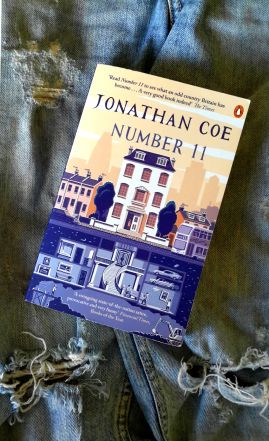
“Number 11” by Jonathan Coe – Book Review

Number 11

By Jonathan Coe

number 11

I read Jonathan Coe’s novel, What a Carve Up! while studying at university a couple of years ago. It was an excellent book – not to mention it lead to an essay worthy of a 1st (it got 2:1, but I’m not bitter or anything…) – so I didn’t need much encouragement in reading another of Coe’s titles.

I picked up Number 11 with a great deal of hope. I put down the book with disappointment.

I was unaware when I started reading that Number 11 features a great deal of narrative strands connecting it with his previous novel, What a Carve Up! (WACU). The wealthy and loathsome Winshaw family, who meet a gruesome end in WACU, have some grandchildren and extended family members yet to be culled. Number 11 appears to be Coe’s way of tying up these loose ends.

I have not read any other Coe novels, but his tendency to be self-referential is known, and as such I cannot be certain if “Number 11” is intended as a sequel to WACU, or if he is just sticking to his regular habits by reusing character names and referencing his own work. Even if it is a sequel, Number 11 can certainly be read independently, you’ll just miss out on the occasional giggle when something familiar pops up.

In any case, I can only judge from what I have read myself, and what I think is this: Number 11 is a lazy sequel to What a Carve Up!.  Before, there were fantastically clever twists and turns, infuriating but exacting use of metafiction; all leading to a tumultuous and harrowing conclusion which looked into the very soul of modern classism and cultural degradation. And now? Some lame attempts at self-referencing and unrevealing examples of Continue reading

Review: “The Name of the Wind” by Patrick Rothfuss

The Name of the Wind

By Patrick Rothfuss

5-stars

name of the wind

I have found my new fantasy series. “The Name of the Wind” is the first in “The Kingkiller Chronicle” series by Patrick Rothfuss.

“I have stolen princesses back from sleeping barrow kings. I burned down the town of Trebon. I have spent the night with Felurian and left with both my sanity and my life. I was expelled from the University at a younger age than most people are allowed in. I tread paths by moonlight that others fear to speak of during the day. I have talked to Gods, loved women, and written songs that make minstrels weep.

My name is Kvothe. You may have heard of me.”

I haven’t had a good fantasy series to get addicted to since I was reading Anthony Horowitz as a teenager. “The Name of the Wind” by Patrick Rothfuss is surely a fantasy for adults. The most sophisticated of its kind I have come across. The language is rich and beautiful and the world Patrick Rothfuss has lent himself to flourishes under his care.

Any book preceded by a fictional map already has my attention. Why? Because it is an indicator of how rich this fictional world is; of how much thought has gone into its construction.  There is a sense of careful management that dictates the movement of the narrative as well as the development of characters.

At 662 pages, it isn’t a paperback that you can snugly fit into your handbag. The creased spine and dog-eared corners of my copy – an upsetting thing for any booklover – is proof of my need to make it fit into my handbag and carry it everywhere until I had finished. Its length might sound intimidating, but the lyricism and storytelling carried me through hundreds of pages without even noticing.

If I were to criticise this book, it would be to say that occasionally the language is so rich with imagery that it is slightly treacly. My other minor criticism is that the majority of the book consists of our protagonist, Kvothe, telling his past life story, neglecting the present of the story. And when I passed the 600th page, I realised that the story had barely progressed at all.

BUT, having said all this, I do not care. My criticisms fade into insignificance. I hope “The Name of the Wind” will be the extended preface to a long series of novels that will continue to capture my imagination for years to come.

Review: “The Reader on the 6.27” by Jean-Paul Didierlaurent

The Reader on the 6.27

Jean-Paul Didierlaurent

9781447276494The Reader on the 6-27

This book is the antidote. To cynicism, to the everyday drudgery of existence. I cannot recommend this book enough to you, my reader.

“The Reader on the 6.27” will reignite your hope and redeem every bad book, every disappointing ending; every over-pretentious pit-stain of a novel you have ever had the misfortune to encounter. This book will remind you of your faith in literature.

Guylain Vignolles hates his job; Guylain works in a book-pulping factory. His only joy is his morning ritual, where he boards the 6.27 train and reads from the fragments of books he has saved from the teeth of the monster. He reads aloud to his fellow passengers, who “show him the indulgent respect reserved for harmless nutters”. Nevertheless, he is the ray of sunshine that briefly illuminates the dullness of their 9-to-5’s.

“He was the reader, the bearer of the good word.”

Guylain appears to be suffering from the Nausea, as Sartre would define it: that indefinable feeling deep in your gut that life is pointless. Then one day, he happens upon a USB memory stick that changes his life forever. What is on the USB? The diary entries of a 28-year-old toilet attendant, named Julie.

How, you might ask, can this bored young woman, who sits outside toilet cubicles all day, help Guylain? How can accounts of what other humans are literally experiencing in their guts save him? Isn’t she just another sufferer of everyday drudgery, like him? Well, Julie is no ordinary toilet attendant.

Humanity abounds – glorious, at times stupid and disgusting, but glorious humanity. There is nothing high-flown about this honest, forthright account of how words can, sometimes, save people. Of how people can save each other.

This book is the antidote to modern life. Continue reading

Book Review: “The Buried Giant” by Kazuo Ishiguro

The Buried Giant

by Kazuo Ishiguro

buried giant 2.jpg

My first reading of an Ishiguro novel has shown me how his masterful storytelling has succeeded in capturing readers around the world.

A mysterious mist covers the land of medieval Britain and robs the inhabitants of their memories. Borrowing from Arthurian legend, Ishiguro takes us on a journey of discovery that meets with adventure and the heart-breaking account of what it means to love and to remember.

By elegantly weaving memories with present action, the passing of time becomes an impeccable example of writing style working in step with the narrative themes. In the quest to find the source of the mist, the memories of our characters come and go and we, as readers, glide imperceptibly between past and present. Quiet revelations permeate the story as they remember things forgotten, and uncover the truth of their present. These revelations are precious moments of truth and clarity spared of ostentation or announcement. You could almost miss them if it weren’t for the rapt attention that Ishiguro conjures with his gently powerful style.

There is not a single moment in this novel that doesn’t feel considered and concise. Every line, every sentence, every moment is integral. All the components are perfectly in tune with one another, like the internal workings of a clock. Busily, steadily, the cogs wind onward and we are comforted by the sense of considered purpose that sustains the entire novel.

As I neared the end, I felt a genuine desire for a quick resolution, a knot somewhere in my chest as I hastened to toward the last page. But, as throughout the rest of the novel, Ishiguro neither slows cruelly – as some authors do, stretching out our anxiety – nor hastily rushes his conclusion. He simply continues, steadily, unswervingly, with the measured pace of a practised storyteller. He trusts in the story to make its own impact and not once does he employ any cheap keep-away tactics.

“The Buried Giant” is a story that stays with you. Moving and gripping, but never pushing, pulling or grabbing, it is a style that invites you in but knows precisely when to let you go. Even when you implore him to continue.

“He felt as one standing in a boat on a wintry river, looking out into dense fog, knowing it would at any moment part to reveal vivid glimpses of the land ahead. And he had been caught in a kind of terror, yet at the same time had felt a curiosity – or something stronger and darker – and he told himself firmly, ‘Whatever it may be, let me see it, let me see it.’”


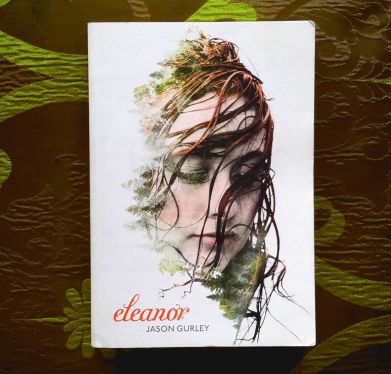
Book Review: “Eleanor” by Jason Gurley

Eleanor

By Jason Gurley

eleanor 2

When tragedy befalls the Witt family, young Eleanor is left to pick up the pieces of her grief-stricken parents. And just when it couldn’t seem to get any worse, Eleanor is pulled out of her world and thrown, bewildered, into a netherworld, before being flung back again with terrible consequences. Like Alice falling through the rabbit-hole, Eleanor dangerously traverses the line between the real and the other.

“Eleanor” by Jason Gurley is classified as sci-fi/fantasy. It would be better to describe it as a realistic drama set against a surrealist dreamscape. Sci-fi and fantasy novels can reflect reality as much as a naturalistic novel, but fantasy looks at the world through a prism that promotes an alternative focus. Like walking through a corridor of distorted mirrors at a fairground, Gurley chooses to inflate or relocate aspects of known reality, forcing specific themes and ideas to come into sharper relief. In the case of “Eleanor”, it is the deeply complex experience of grief that thrives in the freedom of a sci-fi. Continue reading

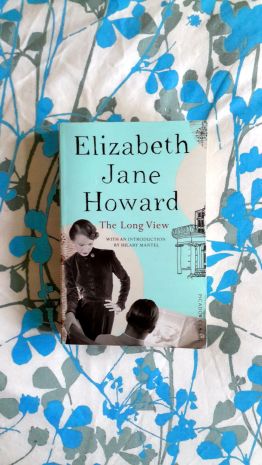
Book Review: “The Long View” by Elizabeth Jane Howard

The Long View

By Elizabeth Jane Howard

the long view1

Mrs Fleming has no first name for the first half of the book and the second half of her life. Defined by her wifely title, she struggles to maintain a sense of self – a struggle no doubt undergone by hundreds of women in this era.

This beautifully told narrative is in reverse: starting in 1950 and ending in 1927. By reversing the chronology, Antonia Fleming’s moment of revelation at age nineteen, becomes the conclusion of the book. This rearrangement creates a feel similar to that of a mystery novel: we know what has happened already, but we don’t know how or why. We begin with an intelligent and sophisticated middle-aged woman, living in London, trapped in an unhappy marriage, hosting dinner parties she doesn’t want with guests she doesn’t like. As the decades retreat, the veils are drawn back, we eventually approach her vulnerable 19-year-old self – a girl so capable of love and intelligent thought but drawn towards an unhappy future, almost inevitably.

It is for this reason that Antonia’s revelation makes both a satisfying and bittersweet end to the novel. I feel the urge to re-read the book immediately, but this time starting at the end, so that I can spot the clues and connections that bring the narrative together. The book is intelligently crafted, and such an endeavour would indeed prove fruitful.

It is beautifully written, although occasionally abstruse. The narrative voice is excellently used to create different characters within the text rather than constantly breaking the flow with dialogue. Howard’s ability to create their different voices is a treat. There is also a nod to formalism in its method of description, keeping the imagery far and away from clichéd or boring observation.

The book’s best feature is the way in which Mrs Fleming’s intimate thoughts are communicated fluidly and with such a degree of empathy that they cease to be fictional. Howard’s strength is finding the words and the cadence with which to communicate untold and often unspeakable feminine sensations.There is an innate femininity to many of the feelings and situations addressed by Mrs Fleming’s story. Told with respect and sensitivity, she reveals the humanity¸ not just the femininity, in the process, because they are made to be understood.Rather than diminishing or reducing female emotion to hysteria or irrationality, as is often the case in literature and life, we are given entry into the innermost workings of a feminine mind. Complex, certainly, but ultimately honest.

“She had forgotten these minute inversions of feeling, that with certain kinds of experience shift all the contours of any settled view.”


Book Review: “Good Omens” by Terry Pratchett & Neil Gaiman

Good Omens

By Terry Pratchett & Neil Gaiman

good omens 1

The world is coming to an end. The armies of Heaven and Hell are assembling. The Four Horsemen are gathering. And the Antichrist is playing make-believe with his friends and his hell-hound, Dog. An unlikely group of heroes converge on Lower Tadfield, Oxfordshire. Agnes Nutter’s prochecies are finally coming true, but this “ineffable Plan” business isn’t quite what everyone expects…

Have you ever been enjoying a book so much that you couldn’t put it down, but then found yourself reaching the end too soon and had to slow down so the adventure could continue for just a bit longer? “Good Omens” is the first book that has ever made me do this. Rushing towards its conclusion too quickly, I wanted to stay on the journey. I didn’t want it to end.

The characters, the language, the narrative – flippant and somehow bluntly logical in the face of utter nonsense. It is vivid, colourful and hilarious.

It’s a style I’ve grown to love from reading Pratchett’s Discworld series, but it is my first reading of a Gaiman  story. I couldn’t tell you when it was one or the other that had the reins from chapter to chapter. The narrative voice was consistent throughout and I honestly felt like I was reading a Pratchett. But I will definitely be getting stuck into some Gaiman very soon as a result of reading this book.

This is one of those books you could keep going back to and reading over and over again and finding more and more hidden gems that will keep surprising you for years to come. The imaginative powers of these two brilliant authors are seemingly endless. Endless and bottomless. Keep plumbing the depths of this book and the world they create will only get bigger and brighter. Whether you decide to focus on the story, the clever use of language and syntax or the ideas that bounce around like a rubber ball inside a perpetual motion machine, the delights do not stop coming.

As far as I’m concerned, this is the essence of what fiction should be. A world of play and an open invitation.

In this present moment, I wish I weren’t writing this blog; I wish I were reading “Good Omens” by Terry Pratchett & Neil Gaiman. A book that proves these two men deserve the title of Legend. Modern philosophers and linguistic philanthropists, this book is a gift for me and you and generations to come.


P.s. I finished reading my copy two days ago. I gave that same copy to a friend yesterday. Pass on the joy!

The F Word & The F Word

“I’m sorry, which one?”

It is a strange thing that modern vernacular now has two possible answers to this question: Feminism or Fuck.

“The F word” is a phrase born of censorship. Keep the nasty words out of the earshot of innocent minds and out of polite conversation. The notion of contracting a word to its first initial and a series of asterisks as a means of hiding it’s meaning, is itself a ridiculous notion. We all know what it means. Children know what it means. That cannot be avoided. The word is still there, you’re fooling no one with your asterisks.

But censorship is its own debate. What is relevant here is that another word is apparently now worthy of being censored to the same level as “Fuck”. And that word is “Feminism”.

How has that happened? How has Feminism become a nasty word to be half-hidden and whispered in conversation for fear of reproach? Feminism is being treated like a dirty word and that is unacceptable. I know that I have personally felt like I need to mumble it under my breath with a tone of apology, to ward off anyone who might roll their eyes and lean back in their chairs wishing they hadn’t started the conversation. People are afraid of arousing debate. And, really, why is that? Why are people scared of talking about important issues, as though it is going to ruin their evening? “I just wanted to have a quiet drink in the pub. I wasn’t looking for an intellectual debate at this time of night!”

Political debate does not equal argument. Sharing opposing ideas can be a passionate experience, yes. But passion, when exhibited by generally reasonable persons, should not lead to negative results. Especially, a word like Feminism – a word that means equality for everyone, everywhere. There is too much misunderstood about this word, but in the words of Caitlin Moran, Feminism is: “Not all the penises being burned in a Penis Bonfire. Just women being equal to men.” And everyone else in between.

So don’t be afraid of this F word. Don’t mumble it under your breath, but say it proudly, with the appropriate decibel level. Of course if you want to go shouting it from the rooftops, then be my guest. You won’t be arrested for public indecency or disturbing the peace, because Feminism is NOT a dirty word. Feminism is a fucking beautiful word.


(Quote from Caitlin Moran found here: http://www.esquire.co.uk/culture/advice/a9641/things-men-dont-know-about-women-caitlin-moran/)